25 April. Thursday 2024

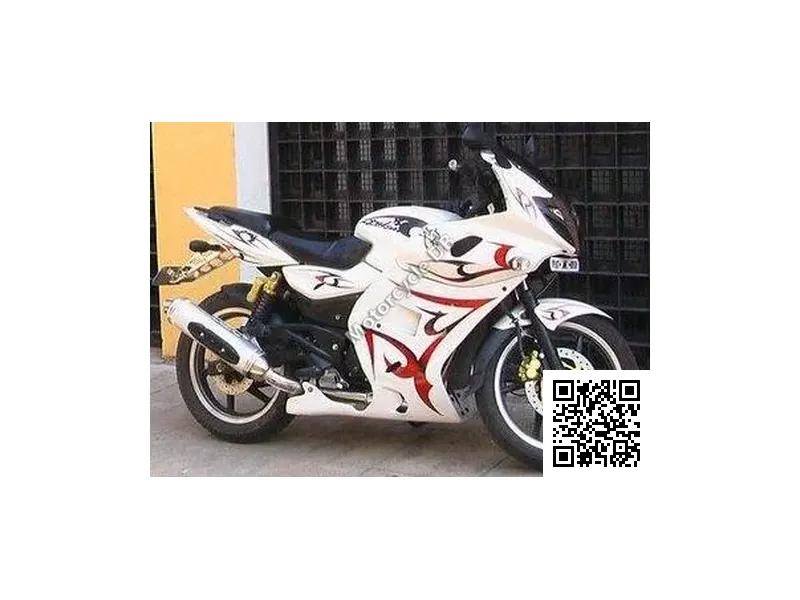

General information | |
| Category | Sport |
| Year | 2011 |
| Model | Bajaj Pulsar 220 F |
Engine and Transmission Specifications | |
| Transmission type,final drive | Chain |
| Gearbox | 5-speed |
| Cooling system | Air |
| Ignition | CDI |
| Fuel system | Carburettor |
| Bore x stroke | 67.0 x 62.4 mm (2.6 x 2.5 inches) |
| Top speed | 144.0 km/h (89.5 mph) |
| Torque | 19.12 Nm (1.9 kgf-m or 14.1 ft.lbs) @ 7000 |
| Power | 21.04 |
| Engine details | Digital twin spark |
| Engine type | Single cylinder, four-stroke |
| Capacity: | 220.00 ccm (13.42 cubic inches) |
Brakes, suspension, Frame and wheels | |
| Wheels | Black five spoke rims |
| Rear brakes diameter | 220 mm (8.7 inches) |
| Rear brakes | Single disc |
| Front brakes diameter | 260 mm (10.2 inches) |
| Front brakes | Single disc |
| Rear tyre dimensions | 120/80-17 |
| Front tyre dimensions | 90/90-17 |
| Rear suspension travel | 90 mm (3.5 inches) |
| Rear suspension | Nitrox |
| Front suspension travel | 130 mm (5.1 inches) |
| Front suspension | Telescooic Forks |
| Frame type | Double Cradle Down Tube |
| | |
Physical measures and capacities | |
| Reserve fuel capacity | 3.20 litres (0.85 gallons) |
| Fuel capacity | 15.00 litres (3.96 gallons) |
| Wheelbase | 1,350 mm (53.1 inches) |
| Ground clearance | 165 mm (6.5 inches) |
| Power/weight ratio | 0.1422 HP/kg |
| Dry weight | 148.0 kg (326.3 pounds) |
Other specs | |
| Comments | Power Steering |
| Carrying capacity | Front Rack Capacity 100 lbs / 45.4 kg. Rear Rack Capacity 50 lbs / 22.7 kg. Towing Capacity 1,050 lbs / 476.3 kg |
| Wheelbase | 1,473 mm (58.0 inches) |
| Overall width | 1,206 mm (47.5 inches) |
| Overall length | 2,504 mm (98.6 inches) |
| Overall height | 1,219 mm (48.0 inches) |
| Rear tyre | 25/10-12 |
| Front tyre | 25/8-12 |
| Rear wheel travel | 254 mm (10.0 inches) |
| Rear Suspension | Double A-Arm |
| Front wheel travel | 254 mm (10.0 inches) |
| Front Suspension | Double A-Arm |
| Driveline | Automatic CVT with EBS, Hi/Lo Range and Reverse. 2/4 WD + Diff Lock |
| Fuel control | Single Overhead Cams (SOHC) |
| Valves per cylinder | 4 |
| Bore x Stroke | 102.0 x 85.0 mm (4.0 x 3.3 inches) |
| Color options | Metallic orange |
| Seat | Split seats |
| Electrical | 12 V Full DC |
| Light | Headloamp: 3Low - projector lamp 55w, High - Ellipsodial lamp 55w |
| Starter | Electric |
Rider Reviews
Add a Comment










- Motorcycles in database: 34383
- Technical specifications: 1152152
- Images of motorcycles: 57274
- Videos: 339
- Manufacturers: 475
Please Login or Register if you would like to leave a comment.