2026 Yamaha YZF-R1 vs 2026 BMW S 1000 RR - Spec Comparison
Choose up to 4 bikes to compare
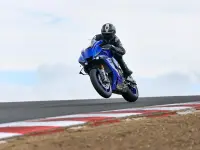
2026 Yamaha YZF-R1
The 2026 Yamaha YZF-R1 is a track-focused superbike engineered for experienced riders seeking maximum performance. Its 998cc inline-four engine delivers aggressive power and precise handling through advanced fuel injection and a lightweight frame, making it ideal for circuit racing and spirited road riding. Known for its razor-sharp agility and cutting-edge electronics, the R1 remains the benchmark middleweight supersport.
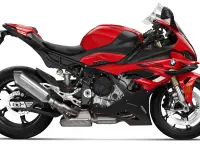
2026 BMW S 1000 RR
The 2026 BMW S 1000 RR is a track-focused superbike engineered for experienced riders seeking extreme performance. Its 999cc inline-four engine delivers 205 horsepower and 112.6 Nm of torque, enabling a 302.6 km/h top speed. Best known for its razor-sharp handling, advanced electronics, and dominance in international superbike racing, it represents BMW's pinnacle of sportbike engineering.
| Specification | 2026 Yamaha YZF-R1 | 2026 BMW S 1000 RR |
|---|---|---|
| Other | ||
| Category | Sport | Sport |
| Color Options | Team Yamaha Blue, Matte Raven Black | Light White/M Motorsport, Sport Blackstorm Metallic |
| Comments | Windscreen. Traction control. Launch control. Slide control. Quick shifter. Power modes. GPS. | - |
| Fuel Tank Material | - | Plastic |
| Fork tube size | - | 45 mm (1.8 inches) |
| Spark plugs | - | NGK LMAR9D-J |
| Brake fluid | - | DOT 4 |
| Tire pressure front | - | 36 PSI (2.5 Bar or 250 kPa) |
| Tire pressure rear | - | 42 PSI (2.9 Bar or 290 kPa) |
| Sprockets | - | 17/46 (front/rear) |
| Chain size | - | 525 |
| Engine | ||
| Capacity: | 997.0 ccm (60.84 cubic inches) | 999.0 ccm (60.96 cubic inches) |
| Engine Type | In-line four, four-stroke | In-line four, four-stroke |
| Fuel Consumption | 7.10 litres/100 km (14.1 km/l or 33.13 mpg) | - |
| Bore x Stroke | 79.0 x 50.9 mm (3.1 x 2.0 inches) | 80.0 x 49.7 mm (3.1 x 2.0 inches) |
| Compression | 13.0:1 | 13.3:1 |
| Cooling System | Liquid | Liquid |
| Fuel System | Injection | Injection |
| Starting | Electric | Electric |
| Ignition | TCI | - |
| Valves Per Cylinder | 4 | 4 |
| Lubrication System | Wet sump | Wet sump |
| CO2 Emissions | - | 161 CO2 g/km |
| EPA Certificate No. | - | TBMXC01.0K67-004 |
| EPA Est. Fuel Consumption | - | 6.87 L/100km (34.2 US mpg) |
| EPA CO Emissions | - | 0.3 CO g/km |
| Aspiration | - | Naturally aspirated |
| Performance | ||
| Power | 197.3 HP (147.0 kW) @ 13500 RPM | ✓210.0 HP (154.0 kW) @ 13750 RPM |
| Torque | ✓113.0 Nm (11.5 kgf-m or 83.3 ft.lbs) @ 11500 RPM | ✓113.0 Nm (11.5 kgf-m or 83.3 ft.lbs) @ 11000 RPM |
| Power/Weight Ratio | 1.1153 HP/kg (dry) | 1.1351 HP/kg (dry) |
| Top Speed | 270.0 km/h (167.8 mph) | ✓302.6 km/h (188.0 mph) |
| 0-60 mph | - | 3.10 seconds |
| Chassis & suspension | ||
| Frame | Aluminum Deltabox | Bridge-type aluminum laminate frame with load-bearing engine |
| Front Suspension | 43mm KYB® inverted fork; fully adjustable | Upside-down telescopic fork, diameter 45 mm, spring preload, rebound and compression stages adjustable |
| Rear Suspension | KYB® piggyback shock, fully adjustable | Aluminium swing arm, full floater pro, compression and rebound damping adjustable, adjustable preload |
| Front Wheel Travel | 119 mm (4.7 inches) | 120 mm (4.7 inches) |
| Rear Wheel Travel | 119 mm (4.7 inches) | 118 mm (4.6 inches) |
| Rake (fork angle) | 24.0° | 23.6° |
| Trail | 102 mm (4.0 inches) | 100 mm (3.9 inches) |
| Ground Clearance | 130 mm (5.1 inches) | - |
| Transmission | ||
| Gearbox | 6-speed | 6-speed |
| Transmission Type | Manual | Manual |
| Final Drive | Chain | Chain |
| Clutch | Multiplate assist and slipper clutch | Multiplate clutch in oil bath, anti-hopping clutch, mechanically controlled |
| Brakes & wheels | ||
| Front Brakes | Double disc. ABS. Hydraulic. Four-piston calipers. | Double disc. ABS. Floating discs. Four-piston calipers. |
| Front Brakes Diameter | 320 mm (12.6 inches) | 320 mm (12.6 inches) |
| Rear Brakes | Single disc. ABS. | Single disc. ABS. Floating disc. Single-piston caliper. |
| Rear Brakes Diameter | 220 mm (8.7 inches) | 220 mm (8.7 inches) |
| ABS | Yes | Yes |
| Front Tyre | 120/70ZR17 | 120/70 ZR17 |
| Rear Tyre | 190/55ZR17 | 190/55 ZR17 |
| Dimensions & weight | ||
| Wheelbase | 1405 mm (55.3 inches) | 1457 mm (57.4 inches) |
| Overall Length | 2055 mm (80.9 inches) | 2073 mm (81.6 inches) |
| Overall Width | 690 mm (27.2 inches) | 848 mm (33.4 inches) |
| Overall Height | 1165 mm (45.9 inches) | 1205 mm (47.4 inches) |
| Seat Height | 855 mm (33.7 inches) | ✓832 mm (32.8 inches) |
| Dry weight | ✓176.9 kg (390.0 pounds) | 185.0 kg (407.9 pounds) |
| Wet Weight | 201.0 kg (443.1 pounds) | ✓198.0 kg (436.5 pounds) |
| Fuel Capacity | ✓17.00 litres (4.49 US gallons) | 16.50 litres (4.36 US gallons) |
| Oil capacity | 3.90 litres (4.12 US quarts) | 3.50 litres (3.70 US quarts) |
| Reserve fuel capacity | - | 4.00 litres (1.06 US gallons) |
"Best" (✓) reflects that single spec only, not overall suitability - a bike can win on paper and still be the wrong choice for you. Ties are all marked; specs with no clear better/worse direction (e.g. displacement, wheel size) are never marked, only tinted where bikes differ.
Affiliate links - we may earn a commission from qualifying eBay purchases made through these links.
About this comparison tool
This tool puts up to four motorcycles side by side across their full specification sheets, drawn from a database of 43,000+ models and 1.60M+ individual specifications. Wherever a spec has a clear "better" direction - more power, less weight - the strongest figure in that row is highlighted automatically.
How to use it
Pick a make, model and year for each bike; the model and year lists update to match what you've selected. Two bikes are enough - use "Add another bike" for a third or fourth. Comparisons work across model years too, so you can compare a bike against its own earlier generation. Once you're happy with the lineup, use "Copy share link" to send it to someone else.
What gets compared
Specs are pulled from the same categories used throughout the site: engine and transmission (capacity, power, torque, gearbox), physical measures (weight, seat height, fuel and tank capacity), frame and dimensions, speed and acceleration, and brakes, suspension, frame and wheels (including tyres) - plus general information and maintenance data where it's on record for a bike.
How the highlighting works, and its limits
A highlighted cell means one bike has the clearly better raw number for that spec - more power, less weight, and so on. Fields where "better" genuinely depends on the rider - seat height above all - are deliberately never highlighted: a lower seat isn't automatically the right choice, it's a fit question only you can answer. Winning a row also isn't the same as winning the comparison - a bike can lead on paper in half the rows and still be the wrong bike for you.
Frequently asked questions
Can I compare bikes from different categories, like a scooter against a superbike?
Yes - the tool doesn't restrict what you compare, though a highlighted spec means less when the two bikes aren't really doing the same job.
What happens if a spec is missing for one of the bikes?
It shows as "-" and is never highlighted as a winner - a missing figure never beats one that's actually reported, and never blocks the rest of the row.
Are older model years included?
Yes - each bike's year list covers every model year in the database, so you can compare this year's bike against an earlier generation of the same model.
How do I share a comparison?
Every comparison has its own stable URL - use "Copy share link", or just copy the address bar. The same bikes in the same order always produce the same link.