2026 Bajaj Pulsar N125 vs 2026 Honda CB125F - Spec Comparison
Choose up to 4 bikes to compare
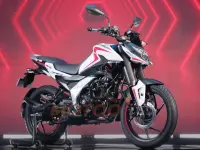
2026 Bajaj Pulsar N125
The 2026 Bajaj Pulsar N125 is a sporty commuter bike designed for budget-conscious riders seeking performance and style. Its 125cc single-cylinder engine delivers nimble handling and fuel efficiency, making it ideal for daily urban commuting. Known for aggressive styling and reliable engineering, this bike balances affordability with the sporty character riders expect from the Pulsar family.
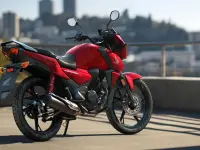
2026 Honda CB125F
The 2026 Honda CB 125F is an entry-level commuter motorcycle ideal for new riders and urban commuters seeking reliable, fuel-efficient daily transportation. Its lightweight 117 kg frame, accessible 790 mm seat height, and nimble handling make it perfect for navigating city traffic and learning fundamental riding skills. Known for Honda's legendary dependability and low maintenance costs, the CB 125F excels as an affordable, practical first motorcycle.
2026 Bajaj Pulsar N125 vs 2026 Honda CB125F: the key differences
Both are naked bikes, so this is a like-for-like choice.
- The 2026 Honda CB125F is 8 kg lighter (117 vs 125 kg).
- The 2026 Honda CB125F carries 1.5 litres more fuel (9.5 vs 11 L).
2026 Bajaj Pulsar N125: It is designed primarily for daily urban commuting and short-distance errands rather than performance riding.
2026 Honda CB125F: Built for low-cost, fuel-efficient urban commuting rather than performance or adventure riding.
Verdict: Choose the 2026 Honda CB125F if you want lighter weight and a bigger tank. Check the full table below for every figure, and the size comparison for fit.
| Specification | 2026 Bajaj Pulsar N125 | 2026 Honda CB125F |
|---|---|---|
| Other | ||
| Category | Naked | Naked |
| Color Options | Red, purple, green | - |
| Comments | Produced in India. | - |
| Rake | - | 26 ° |
| Engine | ||
| Capacity: | 124.6 ccm (7.60 cubic inches) | 123.9 ccm (7.56 cubic inches) |
| Engine Type | Single, four-stroke | Single, four-stroke |
| Cooling System | Air | Air |
| Fuel System | Injection | Injection |
| Starting | Electric & kick | Electric |
| Ignition | CDI | CDI |
| Valves Per Cylinder | 2 | 2 |
| Bore x Stroke | - | 50.0 x 63.1 mm (2.0 x 2.5 inches) |
| Compression | - | 10.0:1 |
| Performance | ||
| Power | ✓11.8 HP (8.7 kW) @ 8500 RPM | 10.7 HP (7.9 kW) @ 7500 RPM |
| Torque | ✓11.0 Nm (1.1 kgf-m or 8.1 ft.lbs) @ 6000 RPM | 10.9 Nm (1.1 kgf-m or 8.0 ft.lbs) @ 6000 RPM |
| Power/Weight Ratio | 0.0944 HP/kg (wet) | 0.0915 HP/kg (wet) |
| Chassis & suspension | ||
| Frame | Single Tubular | Steel diamond |
| Front Suspension | Telescopic fork, 31 mm | 30mm Telescopic fork, non-adjustable fork |
| Rear Suspension | Monoshock | Dual rear shocks with 5-step spring preload adjustment |
| Front Wheel Travel | 125 mm (4.9 inches) | 118 mm (4.6 inches) |
| Rear Wheel Travel | 125 mm (4.9 inches) | 70 mm (2.8 inches) |
| Ground Clearance | 198 mm (7.8 inches) | 160 mm (6.3 inches) |
| Rake (fork angle) | - | 26.0° |
| Trail | - | 92 mm (3.6 inches) |
| Transmission | ||
| Gearbox | 5-speed | 5-speed |
| Transmission Type | Manual | Manual |
| Final Drive | Chain | Chain |
| Clutch | - | Wet, multiplate with coil springs |
| Brakes & wheels | ||
| Front Brakes | Single disc. Combined braking system (CBS) | Single 240mm disc 1 piston caliper |
| Front Brakes Diameter | 240 mm (9.4 inches) | 240 mm (9.4 inches) |
| Rear Brakes | Expanding brake (drum brake) | 130mm Drum |
| Rear Brakes Diameter | 130 mm (5.1 inches) | 130 mm (5.1 inches) |
| Front Tyre | 80/100-17 | 80/100 –18M/C 47P |
| Rear Tyre | 110/80-17 | 100/80 –18M/C 53P |
| Front Wheel | - | 18.0 in |
| Rear Wheel | - | 18.0 in |
| Dimensions & weight | ||
| Wheelbase | 1290 mm (50.8 inches) | 1285 mm (50.6 inches) |
| Seat Height | 795 mm (31.3 inches) | ✓790 mm (31.1 inches) |
| Wet Weight | 125.0 kg (275.6 pounds) | ✓117.0 kg (257.9 pounds) |
| Fuel Capacity | 9.50 litres (2.51 US gallons) | ✓11.00 litres (2.91 US gallons) |
| Overall Length | - | 2015 mm (79.3 inches) |
| Overall Width | - | 750 mm (29.5 inches) |
| Overall Height | - | 1100 mm (43.3 inches) |
| Oil capacity | - | 1.00 litres (1.06 US quarts) |
"Best" (✓) reflects that single spec only, not overall suitability - a bike can win on paper and still be the wrong choice for you. Ties are all marked; specs with no clear better/worse direction (e.g. displacement, wheel size) are never marked, only tinted where bikes differ.
Affiliate links - we may earn a commission from qualifying eBay purchases made through these links.
About this comparison tool
This tool puts up to four motorcycles side by side across their full specification sheets, drawn from a database of 43,000+ models and 1.60M+ individual specifications. Wherever a spec has a clear "better" direction - more power, less weight - the strongest figure in that row is highlighted automatically.
How to use it
Pick a make, model and year for each bike; the model and year lists update to match what you've selected. Two bikes are enough - use "Add another bike" for a third or fourth. Comparisons work across model years too, so you can compare a bike against its own earlier generation. Once you're happy with the lineup, use "Copy share link" to send it to someone else.
What gets compared
Specs are pulled from the same categories used throughout the site: engine and transmission (capacity, power, torque, gearbox), physical measures (weight, seat height, fuel and tank capacity), frame and dimensions, speed and acceleration, and brakes, suspension, frame and wheels (including tyres) - plus general information and maintenance data where it's on record for a bike.
How the highlighting works, and its limits
A highlighted cell means one bike has the clearly better raw number for that spec - more power, less weight, and so on. Fields where "better" genuinely depends on the rider - seat height above all - are deliberately never highlighted: a lower seat isn't automatically the right choice, it's a fit question only you can answer. Winning a row also isn't the same as winning the comparison - a bike can lead on paper in half the rows and still be the wrong bike for you.
Frequently asked questions
Can I compare bikes from different categories, like a scooter against a superbike?
Yes - the tool doesn't restrict what you compare, though a highlighted spec means less when the two bikes aren't really doing the same job.
What happens if a spec is missing for one of the bikes?
It shows as "-" and is never highlighted as a winner - a missing figure never beats one that's actually reported, and never blocks the rest of the row.
Are older model years included?
Yes - each bike's year list covers every model year in the database, so you can compare this year's bike against an earlier generation of the same model.
How do I share a comparison?
Every comparison has its own stable URL - use "Copy share link", or just copy the address bar. The same bikes in the same order always produce the same link.