Ducati's Monster first appeared in 1993 and defined the modern naked bike: an exposed trellis frame, a big L-twin and almost nothing else. Over three decades the name covered engines from around 400cc to 1,200cc.
The current generation, launched in 2021, is a clean-sheet redesign. It uses the liquid-cooled 937cc Testastretta 11° twin, making about 111 hp, and replaces the traditional trellis with a compact aluminium front frame, which makes it much lighter than the Monster 1200 it succeeded. A low seat, cornering ABS, traction control and a TFT dash make it approachable for newer riders while keeping the character of a Ducati twin. The Monster+ adds a small flyscreen and pillion cover.
| Year | Photo | Engine | Power | Weight | Seat | Fields |
|---|---|---|---|---|---|---|
| 2027 | 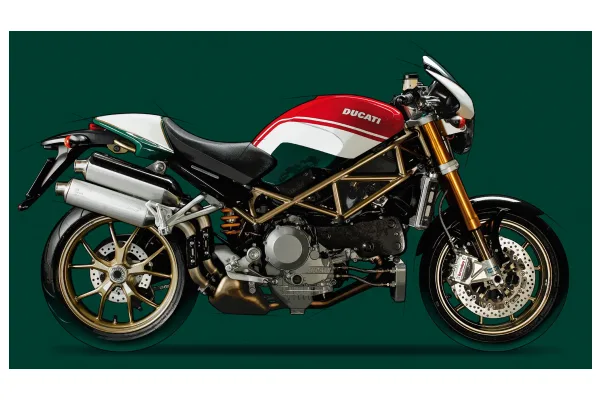 |
890 cc | 111 hp | 175 kg | 815 mm | 47 |
| 2027 | 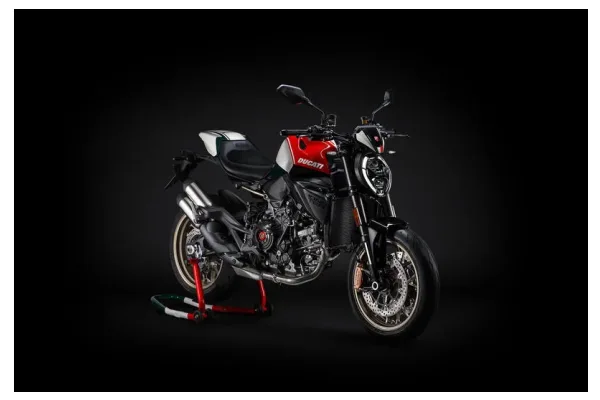 |
890 cc | 111 hp | 175 kg | 815 mm | 47 |
| 2026 | 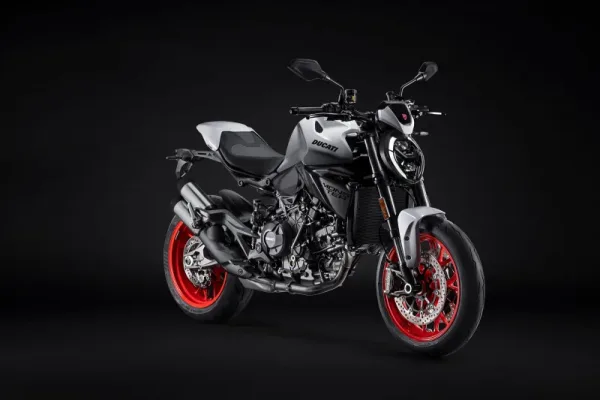 |
890 cc | 111 hp | 166 kg | 815 mm | 35 |
| 2025 | 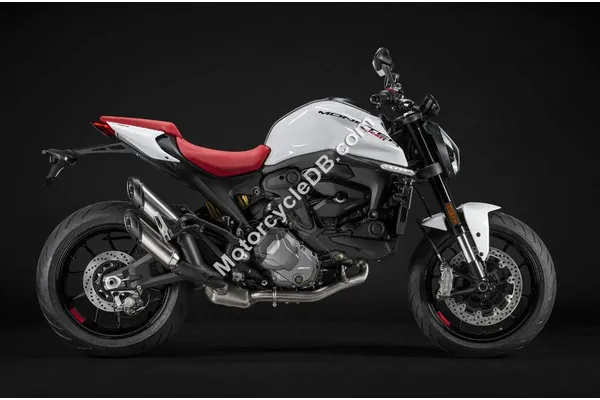 |
937 cc | 111 hp | 166 kg | 775 mm | 49 |
| 2024 | |
937 cc | 111 hp | 166 kg | 775 mm | 50 |
| 2023 | |
937 cc | 109.7 hp | 166 kg | 775 mm | 51 |
| 2022 | 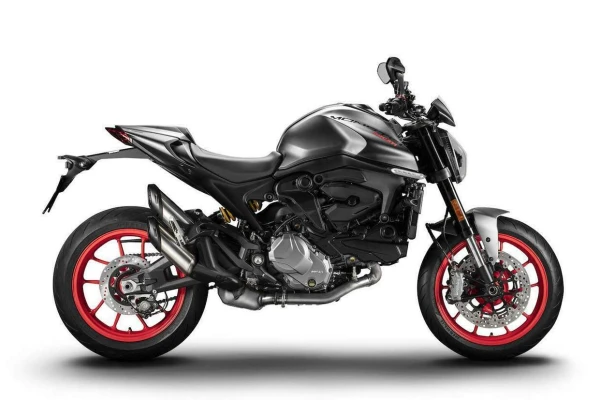 |
937 cc | 109.7 hp | 166 kg | 775 mm | 49 |
| 2021 | |
937 cc | 109.7 hp | 166 kg | 775 mm | 49 |