
Sportbikes
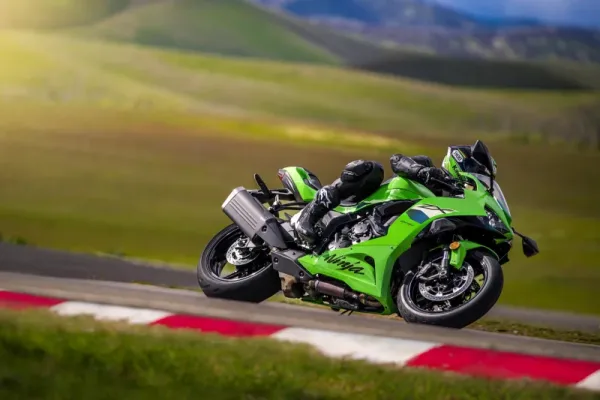
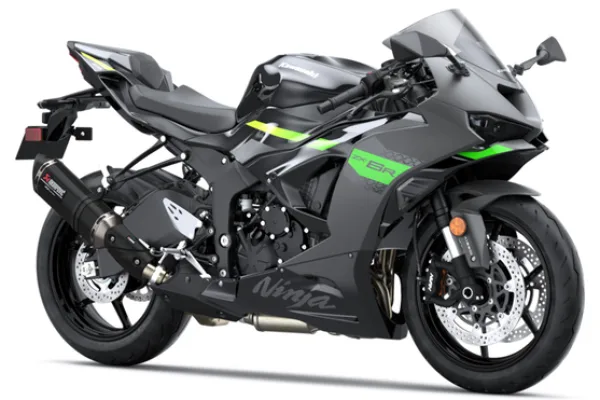
2027Kawasaki Ninja ZX-6R
48 fields on record
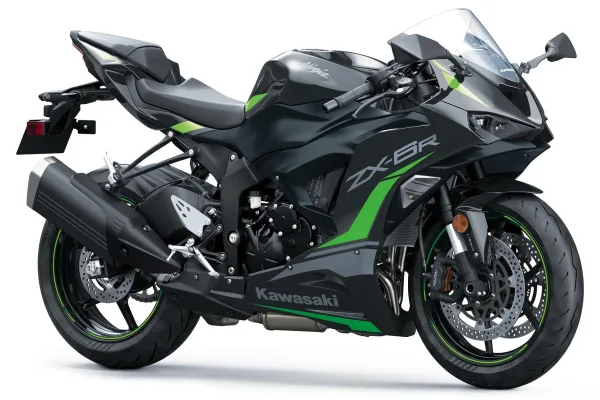
The Kawasaki Ninja ZX-6R 636 returns for 2027 with a thoroughly modernised supersport package built around its familiar 636cc inline-four, now making a claimed 124 hp (122.3 hp) at 13,000 rpm (129 hp with ram air) and 71 Nm at 10,800 rpm. Power runs through a 6-speed gearbox with a standard quickshifter and chain final drive, in an aluminium perimeter frame with a fully adjustable 41mm inverted fork and Nissin radial 4-piston front brakes. Standard electronics now include ABS, traction control, four riding modes, a 4.3-inch TFT display, and Bluetooth connectivity, with a fully-fuelled weight of 198 kg. Built in Japan.
- Capacity
- 636.0 ccm
- Engine
- In-line four, four-stroke
- Gearbox
- 6-speed
- Wet weight
- 198.0 kg
- Seat height
- 830 mm
- Power
- 124.0 HP (91.2 kW) @ 13000 RPM
What’s new for the 2027 Kawasaki Ninja ZX-6R
vs the 2026| Spec | 2026 | 2027 |
|---|---|---|
| Power | 127.0 HP (95.2 kW) @ 13000 RPM | 124.0 HP (91.2 kW) @ 13000 RPM |
| Dry weight | 179.0 kg (394.6 pounds) | not listed |
| Front suspension | 41mm inverted Showa SFF-BP fork with top-out springs, stepless compression and rebound damping, adjustable spring preload | Reverse telescopic hydraulic fork, 41mm diameter, 120mm travel, fully adjustable (preload, compression, rebound). Rake: 23.5 degrees. |
| Rear suspension | Bottom-Link Uni-Trak with gas-charged shock, top-out spring and pillow ball upper mount. Compression damping | Monoshock, 151mm travel, fully adjustable (preload, compression, rebound) |
| Front brakes | Double disc. Floating discs. Nissin 4-piston, monobloc calipers. Optional ABS. | Double Nissin disc, 310mm (12.2 in), radial-mount 4-piston caliper |
| Rear brakes | Single disc. Single-piston caliper. Optional ABS. | Single disc, 220mm (8.66 in), single-piston caliper |
Other years
2004
2005
2006
2007
2008
2009
2010
2011
2012
2013
2014
2015
2016
2017
2018
2019
2020
2021
2022
2023
2024
2025
2026
2027
How it rides
Editorial estimate from the spec sheet - not lab tested- Best for
- A middleweight supersport built for canyon roads and trackdays, with the 636cc engine giving it a broader, more usable powerband than a 600.
- Built for
- A returning icon of the middleweight supersport class, now with modern electronics, a quickshifter, and a TFT dash.
- Not ideal for
- Not for touring, passengers, or riders wanting a relaxed, upright riding position.
Scores are derived from the spec sheet using the same model across every bike, so they compare like for like.
Will it fit you?
Worked out in your browser - nothing is sent to usReliability & safety
Bike Reliability score, safety recalls and owner complaintsUS owner complaints
None filed for 2027 · 65 across all yearsNo US owner complaints are on record for the 2027 model; owners of other years of the Kawasaki Ninja ZX-6R have filed 65.
Source: NHTSA owner complaints (United States). These are unverified reports from owners, not confirmed defects — a handful is normal for a popular model.
Bike Reliability
How the score works →37
out of 100Below average
The Kawasaki Ninja ZX-6R passed its annual roadworthiness test first time 78.1% of the time, 2.9 points below expected for bikes of the same age and mileage. That beats 37% of models.
This covers every year of the model.
78.1%Passed first time
14.0%Failed outright
7.9%Fixed during test
19,000Typical miles
179,033Tests
Pass rate against other bikes
Share of first tests passed with nothing failed or fixed during the test. Same age is what bikes of the same age and mileage pass on average; all bikes is the average over every bike tested, 2005–2025. The score compares this bike with the same-age figure.
Pass rate by miles ridden
All years of this model.
Score by year first registered
24
21
26
28
33
38
40
47
47
42
38
42
34
47
45
54
28
74
'95'96'97'98'99'00'01'02'03'04'05'06'07'08'09'10'11'12
What it fails on
Share of its failed tests that had a fault in each area (one test can fail on several), against all bikes.
From 8,144 failed tests, 2018–2025. In brackets and marked on each bar: all bikes.
Most common faults
- Reflector missing12%
- Shock absorber has a serious fluid leak9%
- Tyre tread depth is below minimum requirements of 1.0mm9%
- Brake excessively binding9%
- Horn not working8%
Share of 9,741 failed tests, 2018–2026, that failed on each fault.
Against its rivals · ranks 6 of 6
| # | Model (all years) | Score | Tests |
|---|---|---|---|
| 1 | Aprilia RS 660 | 79 Good | 996 |
| 2 | Yamaha MT-07 | 71 Good | 16,435 |
| 3 | Honda CBR650R | 64 Good | 5,694 |
| 4 | Honda CBR600RR | 56 Average | 84,882 |
| 5 | Suzuki GSX-R750 | 47 Average | 150,791 |
| 6 | Kawasaki Ninja ZX-6R | 37 Below average | 179,033 |
Rivals are the most-viewed bikes on MotorcycleDB in the same category and engine size, from within three years of this model.
From British annual roadworthiness tests, 2005 to November 2026. Contains public sector information licensed under the Open Government Licence v3.0 (DVSA MOT test data, Great Britain). How Bike Reliability works.
Check a bike by registration
Buying a used bike? Enter its registration to see its MOT history, recorded mileage and how it compares with the model.
Engine
- Capacity
- 636.0 ccm
- Power
- 124.0 HP (91.2 kW) @ 13000 RPM
- Torque
- 71.0 Nm (7.2 kgf-m) @ 10800 RPM
- Engine type
- In-line four, four-stroke
- Power/weight ratio
- 0.6263 HP/kg (wet)
- Bore x stroke
- 67.0 x 45.1 mm
- Compression
- 12.9:1
- Cooling system
- Liquid
- Fuel system
- Injection
- Starting
- Electric
- Ignition
- Digital
- Valves per cylinder
- 4
- Lubrication system
- Forced lubrication, wet sump with oil cooler
Transmission
- Gearbox
- 6-speed
- Transmission type
- Manual
- Final drive
- Chain
- Clutch
- Wet multi-disc, manual
Dimensions & weight
- Wheelbase
- 1400 mm
- Overall length
- 2025 mm
- Overall width
- 710 mm
- Overall height
- 1105 mm
- Seat height
- 830 mm
- Wet weight
- 198.0 kg
- Fuel capacity
- 17.00 litres
- Ground clearance
- 130 mm
- Dry weight
- Not on record - add it
Chassis & suspension
- Frame
- Aluminium perimeter
- Front suspension
- Reverse telescopic hydraulic fork, 41mm diameter, 120mm travel, fully adjustable (preload, compression, rebound). Rake: 23.5 degrees.
- Rear suspension
- Monoshock, 151mm travel, fully adjustable (preload, compression, rebound)
- Front wheel travel
- 120 mm
- Rear wheel travel
- 134 mm
- Rake (fork angle)
- 27.0°
- Trail
- 101 mm
Brakes & wheels
- Front brakes
- Double Nissin disc, 310mm (12.2 in), radial-mount 4-piston caliper
- Front brakes diameter
- 310 mm
- Rear brakes
- Single disc, 220mm (8.66 in), single-piston caliper
- Rear brakes diameter
- 220 mm
- Front tyre
- 120/70-17, tubeless
- Rear tyre
- 180/55-17, tubeless
Maintenance
- Tyre pressure (solo)
- Front 250 kPa (36 psi), rear 290 kPa (42 psi)
- Engine oil
- SAE 10W-40, API SG, SH, SJ, SL, or SM with JASO MA, MA1 or MA2
- Fuel grade
- Unleaded, 95 RON or higher, max E10
- Battery
- 12 V 8 Ah
- Spark plug
- NGK CR9E
- Chain slack
- 30-40 mm
- Coolant capacity
- 2.40 litres
- Brake fluid
- DOT 4
Other
- Comments
- Standard equipment includes ABS, 4 riding modes, a 4.3-inch TFT colour display, Bluetooth connectivity, traction control, a quickshifter, and a slip-assist clutch. Manufactured in Japan.
Specs last verified against published sources: .
Compiled from manufacturer documentation and user contributions, corrected on an ongoing basis. Spotted something wrong? Tell us.
What changed, year to year
Differences highlighted| Specification | 2004 | 2010 | 2016 | 2021 | 2027 |
|---|---|---|---|---|---|
| Capacity | 636 cc | 599 cc | 636 cc | 636 cc | 636 cc |
| Dry weight | 161 kg | — | 191 kg | 191 kg | — |
| Seat height | 825 mm | 815 mm | 831 mm | 830 mm | 830 mm |
| Fuel capacity | — | 17 L | 17 L | 17 L | 17 L |
| Bike Reliability ⓘ | 42 Average | 54 Average | Too few tests | Too few tests | Too new |
Illustrative - generated automatically by diffing the year records already on file, not a manufacturer-published changelog.
Rider Reviews
Common questions
Is the Kawasaki Ninja ZX-6R reliable?
Across all years, the Kawasaki Ninja ZX-6R has a Bike Reliability score of 37 out of 100 (below average), better than 37% of models. It passed its annual roadworthiness test first time 78.1% of the time against 82.2% for all bikes, 2.9 points below what is expected for bikes of the same age and mileage. Its most common reason to fail is lights & indicators (54% of failed tests). Based on 179,033 tests in Great Britain.
What is the engine size of the Kawasaki Ninja ZX-6R?
The 2027 Kawasaki Ninja ZX-6R has a Capacity of 636.0 ccm (38.81 cubic inches).
What engine power does the Kawasaki Ninja ZX-6R have?
The 2027 Kawasaki Ninja ZX-6R has a Power of 124.0 HP (91.2 kW) @ 13000 RPM.
How many gears does the Kawasaki Ninja ZX-6R have?
The 2027 Kawasaki Ninja ZX-6R has a Gearbox of 6-speed.
What is the torque of the Kawasaki Ninja ZX-6R?
The 2027 Kawasaki Ninja ZX-6R has a Torque of 71.0 Nm (7.2 kgf-m or 52.4 ft.lbs) @ 10800 RPM.
How much does the Kawasaki Ninja ZX-6R weigh?
The 2027 Kawasaki Ninja ZX-6R has a Wet weight of 198.0 kg (436.5 pounds).
Shop this bike
Affiliate linksWe may earn a commission from qualifying eBay or Amazon purchases made through these links. As an Amazon Associate I earn from qualifying purchases.

Please log in or register if you'd like to leave a comment.
Own one? Add it to My Garage and write an owner review with an Owner badge.